Map the shopping journey
I structured the key user flow from product browsing to cart, checkout, and final confirmation, ensuring each step had a clear purpose.
E-commerce UX / Prototyping / Front-end
Developed and improved the online shopping experience for Supply, a local Australian streetwear store. My work combined information architecture, Figma prototyping and front-end interaction implementation across product browsing, cart and checkout.
Supply is a local Australian streetwear store. This project focused on UX design and front-end development for its online shopping platform, covering product browsing, product details, cart, checkout and order confirmation, with an emphasis on information structure and interaction design.
I created a 28-page Figma prototype, refined information architecture and page hierarchy, designed over 20 interface components and layouts, and implemented key interactions using HTML, CSS and JavaScript.
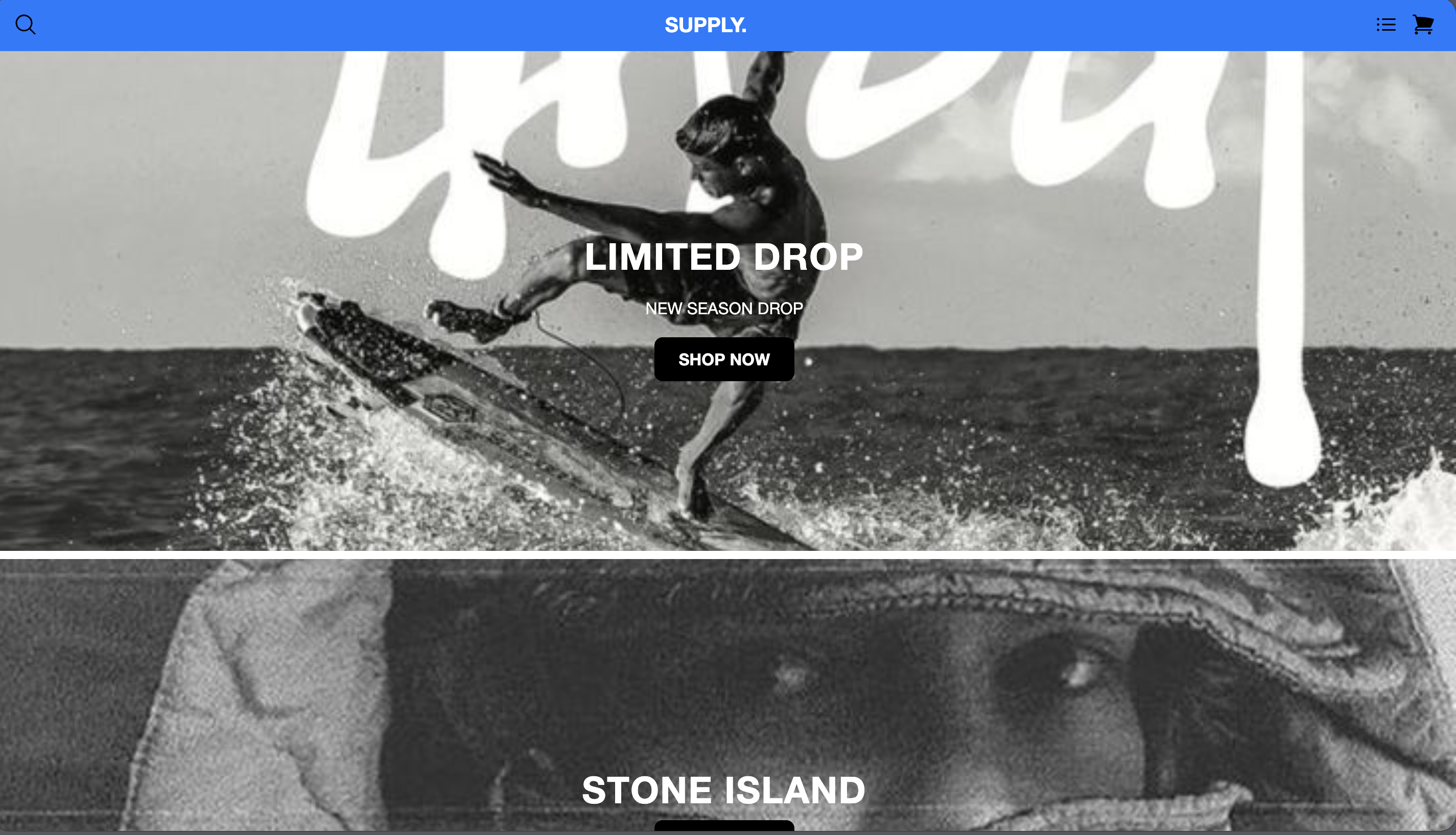
The original shopping experience needed a clearer structure across product discovery and checkout. Users needed to move from browsing to purchasing with less friction, more predictable interaction feedback, and a stronger sense of where they were in the process.
The design challenge was not only to make the interface look more refined, but also to make the shopping flow easier to scan, understand, and complete.
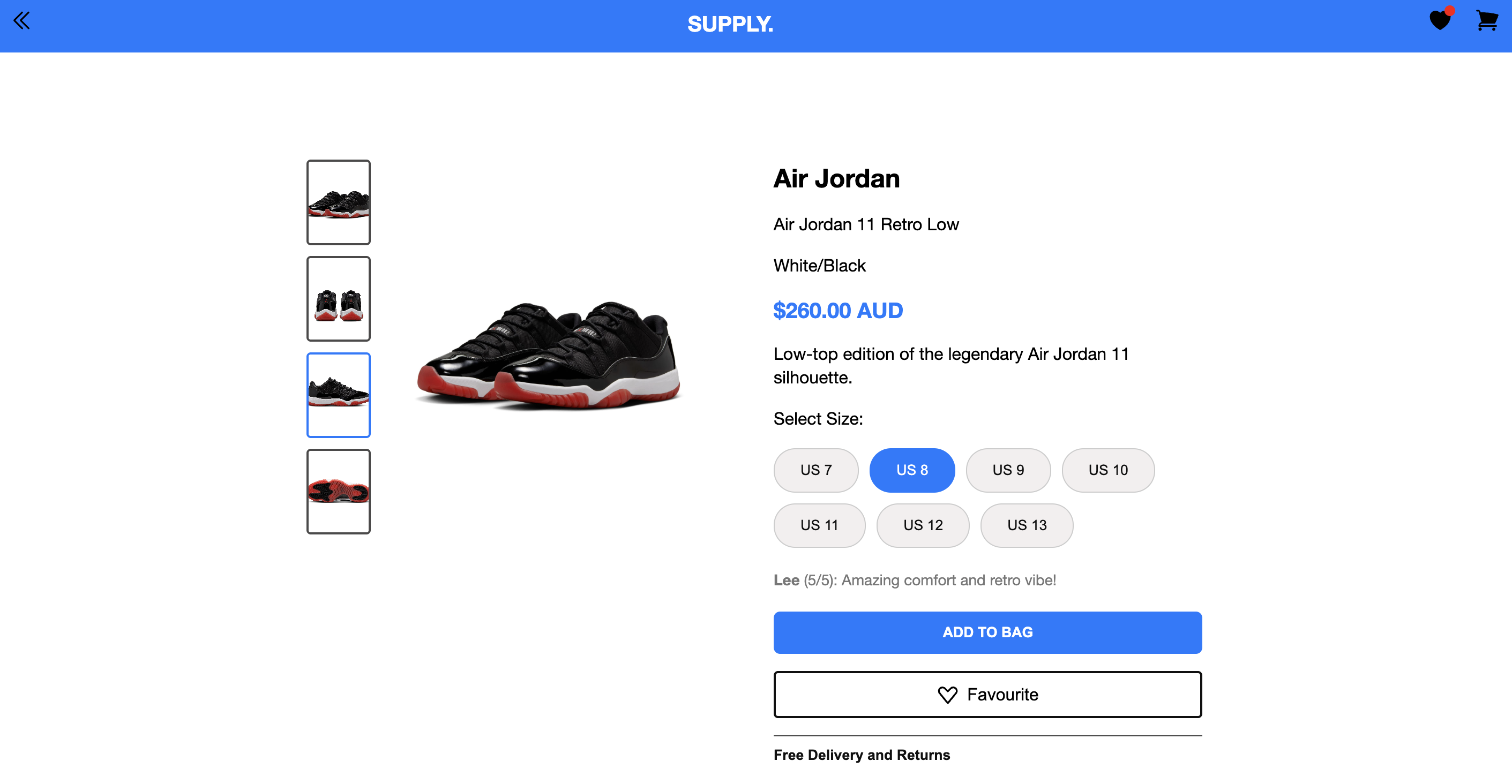
I structured the key user flow from product browsing to cart, checkout, and final confirmation, ensuring each step had a clear purpose.
I reorganised page hierarchy and product information to support clearer discovery, comparison, and decision-making.
I created consistent interface elements such as product cards, navigation, buttons, cart items, forms, and summary panels.
I used HTML, CSS, and JavaScript to rebuild key interactions and better understand how design decisions translate into functional interface behaviour.
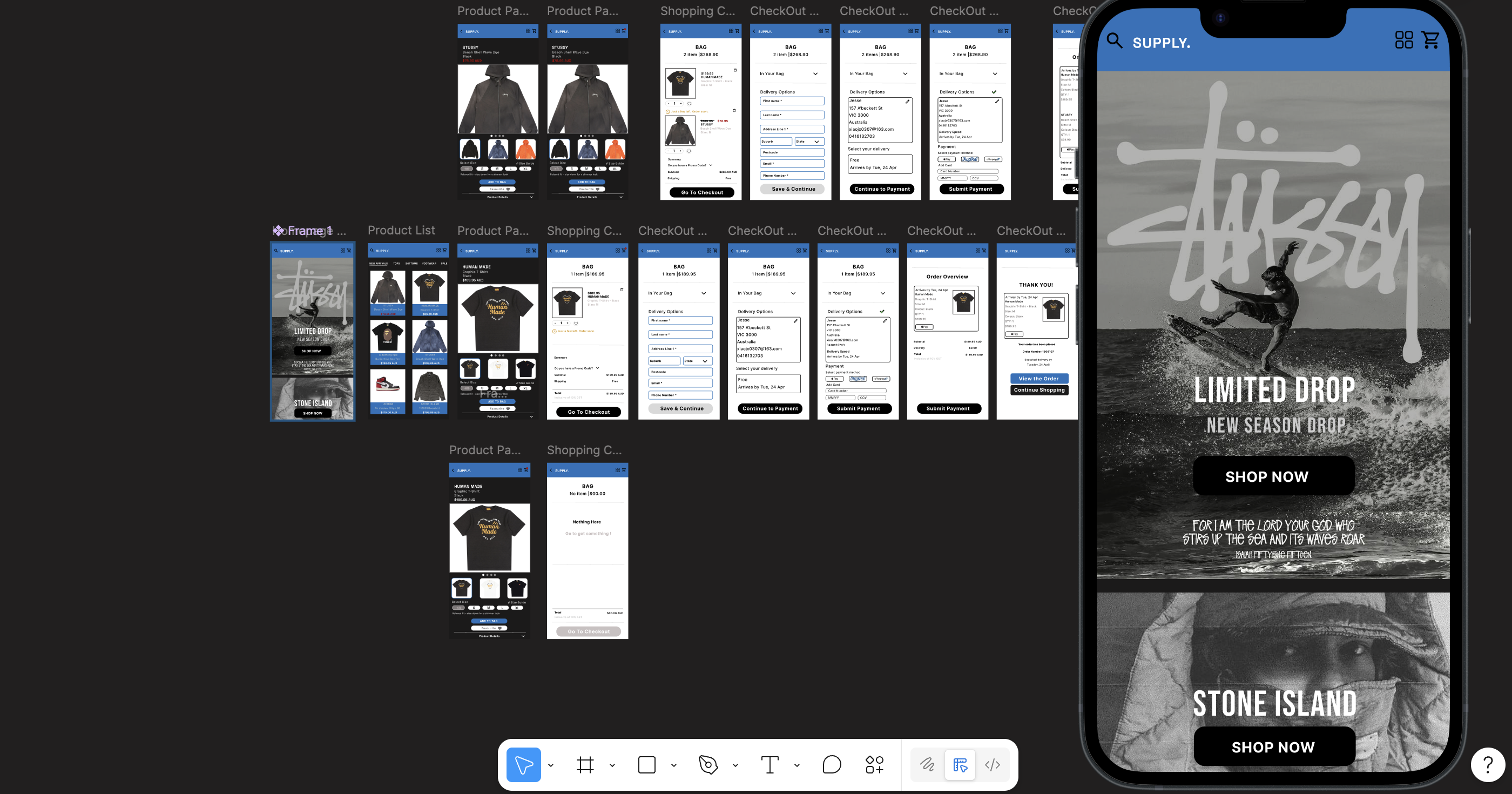
Improved navigation and product hierarchy helped users better understand where to browse, compare items, and continue through the shopping journey.
Reusable components improved visual consistency and made the interface easier to scan across multiple pages.
Cart, checkout, and confirmation pages were structured to reduce uncertainty during purchase-related actions.
Front-end implementation helped test how interaction feedback, responsive layout, and interface behaviour worked beyond the static prototype.
Reflection
This project connected information architecture, reusable components and user flows into a coherent shopping experience. Front-end implementation allowed me to examine responsive layouts and interaction feedback, keeping the design clear and practical to implement.